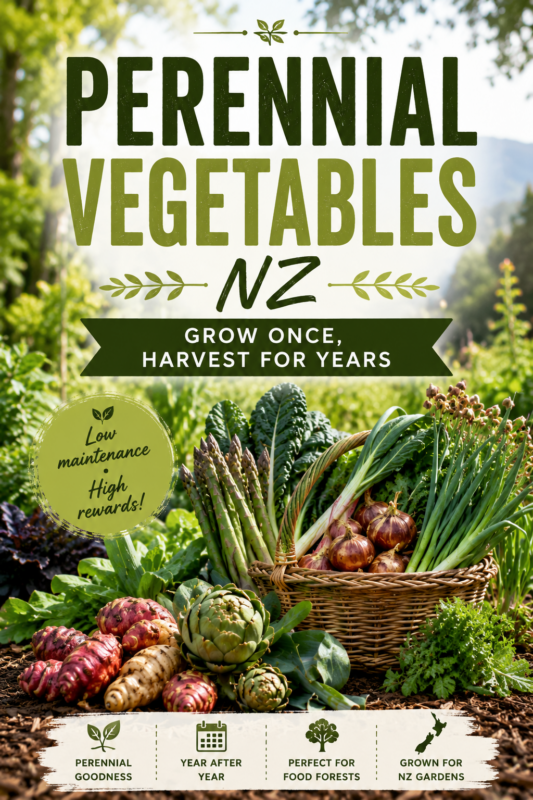
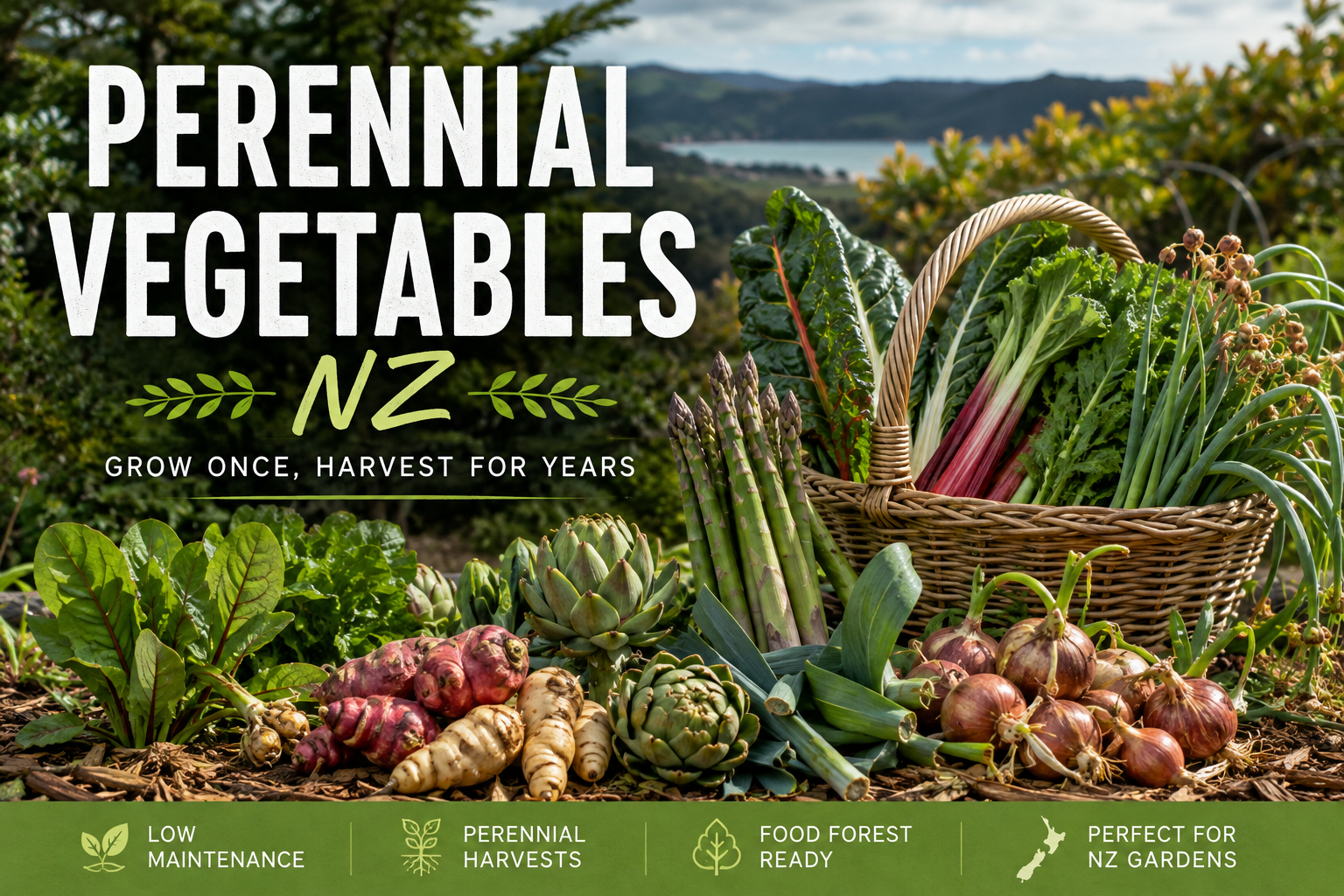
If you’re looking to create a productive, low-maintenance food garden, perennial vegetables are one of the best investments you can make. Unlike annual vegetables that need to be replanted every season, perennial vegetables return year after year, often producing larger harvests as they become established.
For New Zealand gardeners, perennial vegetables are especially valuable. They reduce the amount of digging, sowing, watering and weeding required while providing fresh food for many years. Whether you’re creating a food forest, establishing a permaculture garden or simply wanting an easier vegetable patch, perennial vegetables deserve a place in every NZ garden.
In this guide you’ll discover the best perennial vegetables for New Zealand conditions, how to grow them successfully, and how to build a garden that becomes more productive with each passing year.
What Are Perennial Vegetables?
Perennial vegetables are plants that continue growing for three years or more without needing to be replanted. While most common vegetables such as lettuce, carrots, beans and tomatoes complete their life cycle within a single season, perennial vegetables survive through winter and produce fresh growth every spring.
Many perennial vegetables die back during the colder months before re-emerging as temperatures warm. Others remain evergreen and can be harvested throughout much of the year.
Because they develop extensive root systems over time, established perennial vegetables are often far more drought tolerant than annual crops and generally require less fertiliser and irrigation.
Why Grow Perennial Vegetables?
There are many reasons gardeners throughout New Zealand are discovering perennial vegetables.
Once established they require significantly less work than annual crops. Instead of preparing beds, sowing seed and transplanting seedlings every spring, your garden simply begins growing on its own.
Their deep root systems improve soil health by increasing organic matter, feeding soil biology and reducing erosion. These deeper roots also allow plants to access moisture and nutrients unavailable to shallow-rooted vegetables.
Many perennial vegetables begin producing earlier in spring than annual vegetables, giving you fresh harvests when little else is available.
Perhaps most importantly, perennial vegetables fit beautifully into food forests and regenerative gardens where permanent planting creates a resilient ecosystem rather than a constantly disturbed vegetable patch.
Best Perennial Vegetables for NZ Gardens
| Plant | Climate | Harvest | Difficulty |
|---|---|---|---|
| Asparagus | Most of NZ | Spring | Easy |
| Rhubarb | Cool to temperate | Spring-Autumn | Very Easy |
| Sorrel | Nationwide | Most of the year | Very Easy |
| Jerusalem Artichoke | Nationwide | Autumn-Winter | Easy |
| Walking Onions | Nationwide | Year-round | Very Easy |
| Globe Artichoke | Most of NZ | Spring-Summer | Easy |
| Perennial Kale | Frost-free to light frost | Year-round | Easy |
| Egyptian Spinach | Warmer regions | Summer | Easy |
Multiplying Onions (Potato Onions)
Multiplying onions, often called potato onions, are one of the most productive perennial onion crops for New Zealand gardens. Unlike ordinary onions that grow from seed and produce a single bulb, multiplying onions divide underground into clusters of bulbs. Each bulb planted can produce five, ten or even more new onions by the end of the season.
After harvesting, simply save a few of the healthiest bulbs and replant them to produce the following year’s crop. Over time your supply can increase dramatically without ever needing to purchase seed again.
They prefer full sun and well-drained soil but are remarkably forgiving once established. Because they naturally multiply each year, they’re an ideal crop for self-sufficient gardeners wanting a reliable source of cooking onions.
Mulching heavily helps suppress weeds while maintaining even soil moisture, producing larger and healthier bulbs.
Perennial Leeks
Perennial leeks offer all the flavour of traditional leeks without needing to sow fresh seed each season. These hardy plants gradually form clumps that can be divided every few years, giving you an ever-expanding supply of planting material.
Unlike annual leeks that are harvested once, perennial leeks continue producing new shoots from the base after harvest. Many gardeners simply cut the larger stems while allowing smaller offsets to continue growing.
Perennial leeks tolerate cold winters well and provide valuable harvests during periods when many annual vegetables have slowed down. Their mild onion flavour makes them suitable for soups, casseroles, stir fries and countless everyday meals.
Oca (New Zealand Yam)
Despite often being called the New Zealand Yam, oca actually originated in the Andes of South America. It has become one of the easiest and most rewarding perennial-style root crops for New Zealand gardeners.
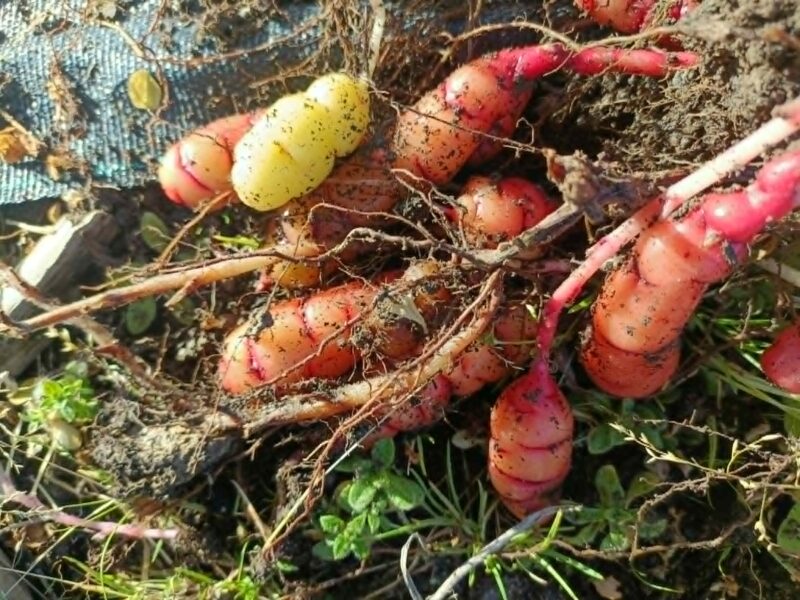
Oca produces colourful underground tubers in shades of yellow, pink, red and orange that are delicious roasted, steamed, fried or eaten raw after sweetening in the sun. Their flavour is often described as a cross between potato and lemon with a pleasant crisp texture.
Plants grow throughout spring and summer before forming tubers as the days shorten during autumn. At harvest, it’s easy to leave behind a few smaller tubers, which will regrow the following season without any additional work.
Oca thrives in fertile, well-drained soil with regular moisture and generally suffers from very few pests or diseases, making it an excellent crop for beginner gardeners.
Mashua
Mashua is another fascinating Andean tuber that deserves far greater recognition in New Zealand food forests. Closely related to nasturtiums, it produces vigorous climbing vines with attractive edible flowers followed by colourful underground tubers.
One of mashua’s greatest strengths is its ability to grow successfully in cooler, wetter climates where some other root crops struggle. Once established, plants require very little attention beyond providing support for the vines to climb.
The tubers are typically harvested after the first frosts of autumn. Cooking mellows their flavour considerably, producing a sweet, earthy vegetable that can be roasted, baked or added to soups and stews.
Like oca, leaving several small tubers in the ground or replanting a portion of the harvest ensures another crop the following year. This makes mashua an excellent long-term addition to productive perennial gardens and food forests.
Asparagus
Asparagus is perhaps the best-known perennial vegetable and one of the longest-lived crops you can grow. A well-prepared asparagus bed can remain productive for 20 years or more.
Although patience is required during establishment, mature plants produce delicious spring spears that far exceed supermarket quality. Once harvesting begins, you’ll appreciate why asparagus has earned its reputation as one of the most rewarding perennial vegetables.
Rhubarb
Rhubarb is incredibly reliable throughout much of New Zealand. Once planted, crowns gradually increase in size and can produce harvests for decades.
The edible stalks are perfect for desserts, jams and sauces, while the large leaves create an attractive feature within the garden. Remember that the leaves themselves should never be eaten.
Sorrel
Sorrel deserves far more attention than it receives. This hardy leafy perennial provides fresh greens over much of the year and has a pleasant lemony flavour that works beautifully in salads, soups and sauces.
Plants establish quickly, tolerate repeated harvesting and often become one of the earliest greens available each spring.
Jerusalem Artichokes
Despite the name, Jerusalem artichokes are actually a type of sunflower grown for their underground tubers.
They are incredibly productive and remarkably easy to grow. Once planted they generally return every year, often producing larger harvests over time.
Because they spread readily, it’s wise to plant them where they have room to expand or where their enthusiastic nature can be managed.
Walking Onions
Egyptian Walking Onions are one of the easiest perennial vegetables available. Instead of producing flowers, they develop clusters of small onions on top of the stems. As these become heavy, the stems bend over and the bulbils root where they touch the ground, effectively “walking” around the garden.
Both the green leaves and underground bulbs can be harvested, providing onions for much of the year.
Globe Artichokes
Globe artichokes are striking ornamental plants that also happen to produce delicious flower buds.
Large silver foliage makes them an attractive feature in ornamental gardens while rewarding gardeners with impressive edible harvests each season.
Perennial Kale
Perennial kale plants are becoming increasingly popular among food forest growers. Unlike ordinary brassicas, these perennial plants continue producing edible leaves year after year.
They provide nutritious greens during periods when annual brassicas are struggling and can become substantial shrubs if left unpruned.
How to Grow Perennial Vegetables Successfully
The biggest mistake many gardeners make is treating perennial vegetables like annual crops. Since these plants will remain in the same location for many years, preparation is far more important than speed.
Begin by selecting a permanent location where plants won’t need moving later. Improve the soil with generous quantities of compost and organic matter before planting. Deep preparation pays dividends because many perennial vegetables develop extensive root systems.
Mulching is particularly important. A thick layer of organic mulch conserves moisture, suppresses weeds and gradually feeds the soil as it breaks down.
Avoid excessive harvesting during the establishment years. Allow young plants to build strong roots before expecting heavy yields.
Perennial Vegetables in a Food Forest
Perennial vegetables naturally complement food forests because they occupy the lower layers beneath fruit and nut trees.
Many thrive in partial shade once established, making them ideal companions beneath deciduous trees where they receive winter sunlight and summer protection.
Combining perennial vegetables with herbs, berries, fruit trees and nitrogen-fixing plants creates a productive ecosystem that becomes healthier and easier to manage each year.
Common Mistakes to Avoid when Growing Perennial Vegetables
One of the biggest mistakes is planting without considering the mature size of the plant. While a young asparagus crown occupies very little space, a mature clump can become substantial.
Another common error is harvesting too heavily during the first few years. Establishment takes time, and patience is rewarded with decades of abundant production.
Many gardeners also underestimate how permanent these crops become. Choosing the right location from the beginning saves considerable effort later.
Are Perennial Vegetables Worth Growing?
Absolutely.
If your goal is producing more food with less ongoing work, perennial vegetables are among the smartest plants you can add to your garden.
Although some require patience during establishment, the long-term rewards are enormous. Year after year they continue producing fresh harvests while requiring only occasional maintenance.
Combined with fruit trees, berries and perennial herbs, they form the backbone of a resilient food-producing garden that becomes increasingly productive over time.
Which Perennial Vegetables Grow Best in Different Parts of New Zealand?
One advantage of perennial vegetables is that there are suitable species for almost every New Zealand climate.
Northland and Auckland: Tree collards, perennial basil, Egyptian spinach, Okinawan spinach, mashua, oca and walking onions all thrive.
Waikato, Bay of Plenty and Taranaki: Most perennial vegetables perform exceptionally well thanks to reliable rainfall and moderate winters.
Wellington and Nelson: Asparagus, sorrel, rhubarb, perennial leeks, globe artichokes and Jerusalem artichokes are excellent choices.
Canterbury and Otago: Rhubarb, asparagus, walking onions, perennial leeks and oca tolerate colder winters particularly well.
Even gardeners in areas with heavy frosts can enjoy an impressive collection of perennial vegetables by selecting varieties suited to their local climate.
Can You Grow a Vegetable Garden That Mostly Looks After Itself?
One of the biggest attractions of perennial vegetables is that they dramatically reduce the amount of work required each year.
Instead of preparing soil, buying seedlings and planting new crops every spring, perennial vegetables simply emerge when conditions are right. Established plants develop deep root systems that help them survive dry periods and compete better with weeds.
Although no garden is completely maintenance-free, replacing even a portion of your annual vegetables with perennial crops can reduce watering, weeding and replanting while increasing long-term food production.
Frequently Asked Questions
What is the easiest perennial vegetable to grow in New Zealand?
Walking onions, rhubarb and sorrel are among the easiest perennial vegetables for NZ gardeners. They establish quickly, tolerate a wide range of conditions and require very little maintenance.
Do perennial vegetables survive frost?
Many perennial vegetables tolerate New Zealand frosts extremely well. Asparagus, rhubarb, sorrel and walking onions all survive winter and regrow each spring.
How long do perennial vegetables live?
This depends on the species. Asparagus beds can remain productive for more than 20 years, while rhubarb often survives for decades. Some perennial vegetables effectively live indefinitely if properly maintained.
Can perennial vegetables be grown in containers?
Yes, although larger containers are required for long-term success. Rhubarb, sorrel and walking onions perform particularly well in large pots.
What perennial vegetables produce food the fastest?
Walking onions, sorrel and perennial leeks usually provide harvests within their first season. Asparagus takes longer but rewards patience with decades of production.
Are perennial vegetables suitable for beginners?
Yes. In fact, many are easier to grow than annual vegetables because they only need to be planted once and become more resilient as they mature.
Can perennial vegetables grow in poor soil?
Some, such as Jerusalem artichokes and walking onions, tolerate less-than-perfect conditions. However, improving the soil with compost before planting will always produce healthier plants and larger harvests.
How many perennial vegetables should I plant?
Most gardeners begin with three or four species and gradually expand their collection. Because many perennial vegetables can be divided or multiplied, your garden naturally becomes more productive over time.
Are perennial vegetables good for food forests?
Absolutely. They are one of the foundation layers of a food forest, providing reliable harvests beneath fruit trees while protecting and improving the soil year after year.
Annual Vegetables vs Perennial Vegetables
Many gardeners wonder whether they should replace annual vegetables entirely. The answer is usually no. The most productive gardens combine both.
Annual vegetables such as tomatoes, lettuce and beans often produce quickly and offer a wide range of varieties. Perennial vegetables, on the other hand, provide dependable harvests with far less work once established.
A productive garden often includes permanent perennial vegetables around the edges or within a food forest, while annual vegetables are grown in dedicated beds nearby. This gives you reliable food every year while still allowing room for seasonal favourites.
Why Aren’t More People Growing Perennial Vegetables?
Despite their many advantages, perennial vegetables remain surprisingly uncommon in home gardens. One reason is that most commercial seed companies focus on annual vegetables because gardeners need to buy fresh seed every year.
Perennial vegetables are different. Once established, many can be divided, multiplied or propagated at home, allowing gardeners to build their own food supply over time. Walking onions multiply naturally, potato onions divide into larger clumps, perennial leeks can be split, and crops such as oca and mashua can be replanted from a portion of each harvest.
Another reason is familiarity. Most people simply haven’t grown up eating many perennial vegetables, so they don’t realise how productive, resilient and delicious they can be. As interest in food forests, regenerative gardening and self-sufficiency continues to grow throughout New Zealand, perennial vegetables are finally receiving the attention they deserve.
Final Thoughts
Growing perennial vegetables is one of the simplest ways to make your garden more productive while reducing the amount of work required each year. Instead of starting from scratch every spring, you’ll enjoy a garden that wakes up ready to feed you.
Whether you begin with a single rhubarb crown or create an entire perennial food forest, these long-lived vegetables will reward you for many years to come. As your garden matures, you’ll discover why so many experienced gardeners consider perennial vegetables one of the foundations of a truly sustainable food system.